



NLRP1
NLRP1 forms an inflammasome platform with caspase-1, caspase-5, ASC/PYCARD, and NALP1 to process pro-IL-1β[1]. Mechanistically, NLRP1 activation can follow functional degradation, where proteasome-mediated N-terminal degradation releases a C-terminal fragment that activates caspase-1[2]. Human NLRP1 also senses long double-stranded RNA, linking the inflammasome to antiviral innate immune detection[3]. In primary human keratinocytes, NLRP1 rather than NLRP3 drives UVB sensing and IL-1β/IL-18 secretion, defining a key isoform distinction for skin inflammation models[4]. Disease studies connect human NLRP1 mutations with NLRP1-associated autoinflammation with arthritis and dyskeratosis and with syndromic recurrent respiratory papillomatosis through gain-of-function inflammasome activation[5][6]. For experimental applications, DPP9 represses NLRP1 through peptidase activity and FIIND-domain binding, whereas DPP8/9 inhibition activates human NLRP1, induces ASC specks, pyroptotic cell death, and cleaved IL-1β secretion[7]. Structural work further shows that DPP9 sequesters the NLRP1 C terminus and that NLRP1 binding plus DPP9 enzymatic activity suppress inflammasome activation[8][9].
References:
- [1]. Martinon F, et al. The inflammasome: a molecular platform triggering activation of inflammatory caspases and processing of proIL-beta. Mol Cell. 2002 Aug;10(2):417-26. [Content Brief]
- [2]. Sandstrom A, et al. Functional degradation: A mechanism of NLRP1 inflammasome activation by diverse pathogen enzymes. Science. 2019 Apr 5;364(6435):eaau1330. [Content Brief]
- [3]. Bauernfried S, et al. Human NLRP1 is a sensor for double-stranded RNA. Science. 2021 Jan 29;371(6528):eabd0811. [Content Brief]
- [4]. Burian M, et al. NLRP1 Is the Key Inflammasome in Primary Human Keratinocytes. J Invest Dermatol. 2018 Dec;138(12):2507-2510. [Content Brief]
- [5]. Grandemange S, et al. A new autoinflammatory and autoimmune syndrome associated with NLRP1 mutations: NAIAD (NLRP1-associated autoinflammation with arthritis and dyskeratosis). Ann Rheum Dis. 2017 Jul;76(7):1191-1198. [Content Brief]
- [6]. Drutman SB, et al. Homozygous NLRP1 gain-of-function mutation in siblings with a syndromic form of recurrent respiratory papillomatosis. Proc Natl Acad Sci U S A. 2019 Sep 17;116(38):19055-19063. [Content Brief]
- [7]. Zhong FL, et al. Human DPP9 represses NLRP1 inflammasome and protects against autoinflammatory diseases via both peptidase activity and FIIND domain binding. J Biol Chem. 2018 Dec 7;293(49):18864-18878. [Content Brief]
- [8]. Hollingsworth LR, et al. DPP9 sequesters the C terminus of NLRP1 to repress inflammasome activation. Nature. 2021 Apr;592(7856):778-783. [Content Brief]
- [9]. Huang M, et al. Structural and biochemical mechanisms of NLRP1 inhibition by DPP9. Nature. 2021 Apr;592(7856):773-777. [Content Brief]
All Product Categories
-
NLRP1 Related Products (3)
Related Products (3)

-
Muramyl dipeptide
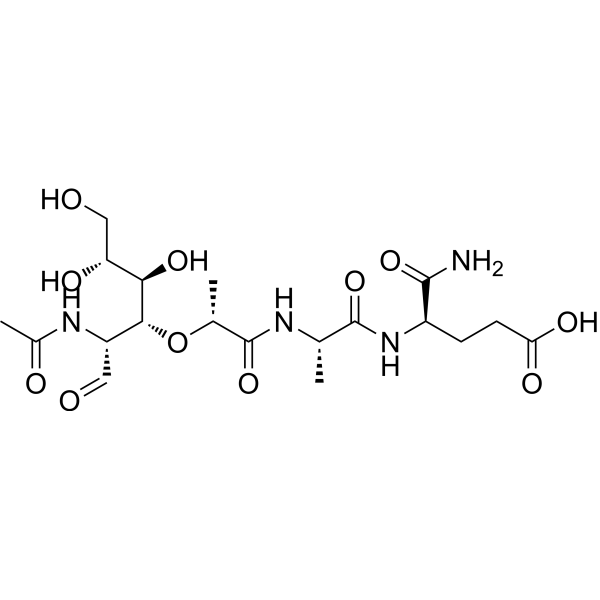 0 ImagesSynonyms: MDPMuramyl dipeptide (MDP) is a synthetic immunoreactive peptide, consisting of N-acetyl muramic acid attached to a short amino acid chain of L-Ala-D-isoGln. Muramyl dipeptide is an inducer of bone formation through induction of Runx2. Muramyl dipeptide directly enhances osteoblast differentiation by up-regulating Runx2 gene expression through MAPK pathways. Muramyl dipeptide is a NLRP1 agonist.
-
ADS032
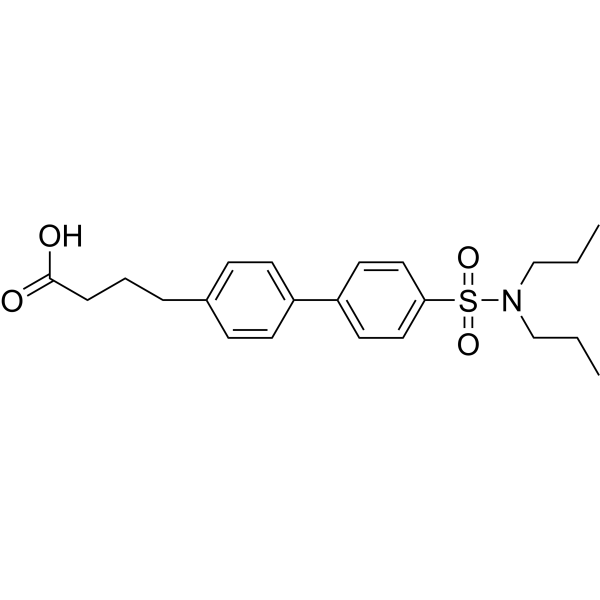 0 ImagesADS032 is a sulfonylurea compound that is an NLRP1 and NLRP3 inflammasome inhibitor. ADS032 reduces the secretion of inflammatory factors and inhibits the oligomerization of ASC. ADS032 has anti-inflammatory effects in a variety of inflammatory models and can be used in the study of inflammatory diseases.
-
7-Oxogedunin
 0 ImagesCat. No.: HY-178898CAS No.: 13072-74-77-Oxogedunin (Compound 7DG; Compound 16) is a small molecule that protects macrophages from cell pyroptosis induced by anthrax lethal toxin (LT). Its target is protein kinase R (PKR). 7-Oxogedunin can widely inhibit the assembly of various inflammasomes (NLRP1 and NLRP3) and the activation of caspase-1 by inhibiting the kinase-independent function of PKR. 7-Oxogedunin has growth inhibitory activity on European corn borer larvae. 7-Oxogedunin can be used for LT toxicity inhibition and pest control research.



